
Tempe Water Heaters — What Size Water Heater Do I Need for My Tempe Home?
Tempe Water Heaters handles water heater replacement, installation and repair across Tempe, AZ, and this guide reflects what actually fails on tanks, tankless heat exchangers, anode rods and gas or electric controls in Arizona desert conditions.
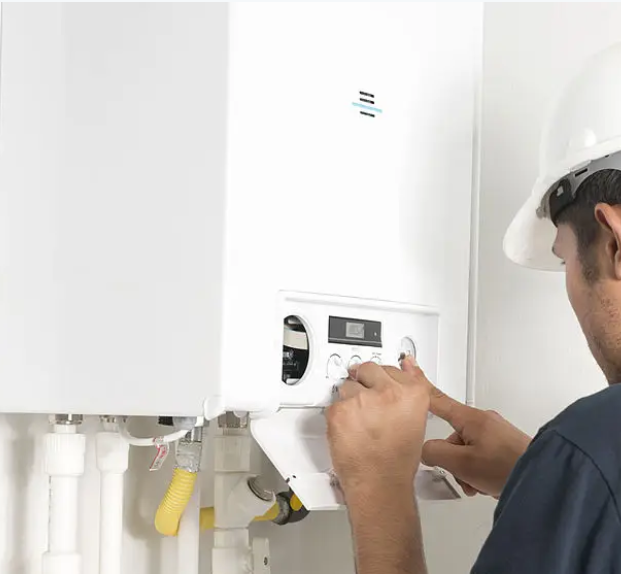
Picking the wrong size water heater is the most common — and most expensive — mistake we see in Tempe homes. Go too small and the morning routine turns into a race against lukewarm water. Go too big and you spend a decade paying to heat a reservoir your family never empties. Here's how to land on the right size for your household, using numbers that reflect Arizona conditions rather than generic national charts.
Why gallon capacity is only a starting point
Most homeowners begin by comparing tank sizes — 40 versus 50 versus 75 gallons — as if storage volume were the whole story. What actually decides whether your showers stay hot is the first-hour rating (FHR): how much hot water the unit delivers in a single hour when it starts with a full tank. FHR blends storage with recovery speed, which is why a quality 40-gallon gas unit with a strong burner can keep pace where a slow 50-gallon electric falls behind during back-to-back morning showers.
Tankless systems work on an entirely different measurement. With no stored volume at all, the figure to watch is flow rate in gallons per minute at the temperature rise your home requires. Instead of asking "how much can it hold," you're asking "how many taps can run at once."
Quick ranges by household size
Use these as a ballpark for Tempe homes, then refine with your actual usage:
- 1–2 people: 30–40 gallons on gas; plan on 40 if electric.
- 2–3 people: 40 gallons gas; 50 gallons electric.
- 3–4 people: 50 gallons gas; 50–65 gallons electric.
- 5+ people: 65–75 gallons, twin tanks, or tankless.
Notice that electric models are always stepped up a size. The reason is simple physics: a heating element restores hot water at about half the pace of a gas burner, so an electric tank needs extra stored volume to survive a busy stretch.
Do the math on your peak hour
Families rarely run out of hot water spread across a whole day — the failure always happens inside one stacked hour. Total up what really happens in your busiest sixty minutes:
- Each shower: about 10–20 gallons of hot water
- One bath: 15–25 gallons
- Dishwasher run: close to 6 gallons
- Laundry on a warm cycle: 10–15 gallons
- Handwashing and sink use: 2–4 gallons
If your household stacks three showers and a laundry load into the same 45 minutes before school and work, you're asking for somewhere between 50 and 70 gallons in one hour. Meeting that means a 50-gallon gas tank with a high first-hour rating, a 65–75 gallon tank, or a tankless unit — a basic 40-gallon electric model will leave the third person in cold water.
What makes sizing in the East Valley different
Our tap water arrives pre-warmed
Tempe's municipal supply is far warmer than most of the country — often above 80°F through the summer and still mild in winter. Because the equipment starts closer to the target temperature, tanks recover noticeably faster and tankless units deliver closer to their advertised maximum flow. Homeowners here can generally take a tankless model's flow claims more at face value than buyers in cold climates can.
Mineral buildup steals capacity year after year
East Valley water hardness commonly sits between 12 and 18 grains per gallon. Minerals settle out and bake onto the tank floor, creating a barrier between the burner and the water — after ten years, a nominal 50-gallon tank may perform more like a 40. When a once-adequate heater starts falling short, the answer is frequently maintenance rather than a bigger unit: flush the tank and inspect the anode rod before shopping for anything larger.
Hot garages reward heat-pump models
Most Tempe water heaters live in the garage, and a heat-pump water heater turns that brutal summer heat into an asset — warm ambient air is exactly what it harvests. The catch is slower recovery whenever the unit drops into resistance-only backup mode, so installers typically step heat-pump models up one size compared with a conventional electric tank.
Sometimes the problem is the piping, not the tank
Plenty of two-story Tempe floor plans park the water heater in the garage at the opposite end of the house from the primary suite. In those homes, "we keep running out of hot water" is often "we wait two minutes for it to get here." A recirculation line or compact point-of-use heater solves that for a fraction of the price of upsizing the tank.
Working out a tankless size
Tankless sizing is an addition exercise: total the flow of everything you expect to run together. Figure roughly 1.8–2.5 gpm per modern showerhead, around 1.5 gpm for a kitchen tap, and 1.5–2 gpm for a washer. Running two showers simultaneously calls for about 4–5 gpm at your needed temperature rise — comfortably within reach of a good residential gas tankless unit given Tempe's warm inlet water, though three simultaneous showers or a big soaker tub may push you toward a larger unit or a paired setup. Because the gas line and venting must match the burner rate, any tankless conversion deserves an on-site evaluation rather than a guess off a spec sheet.
Why oversizing backfires too
Going too large has its own costs: a higher purchase price, a bigger footprint, and standby heat escaping around the clock for years. Oversized tankless units bring their own quirk — short-cycling when demand is low. Right-sizing means covering your genuine peak with a little room for a growing family, not buying the biggest unit that physically fits the space.
Get an exact answer for your home
A precise recommendation takes two minutes of input from you. Send us the number of people in the household, the bathroom count, which appliances use hot water, your current fuel type, and where the unit is located. Snap a picture of the rating plate and we can read off your existing capacity and first-hour rating — then advise whether to match it or step up. You can also weigh fuel types in our gas vs. electric guide or compare designs in our tank vs. tankless breakdown.
Ready for numbers? Ask for a free sizing recommendation and quote — there's no obligation — or see what a full installation involves.
More From the Blog
- How Much Does Water Heater Replacement Cost in Tempe, AZ?
- 7 Signs You Need to Replace Your Water Heater in Tempe
- Tank vs. Tankless Water Heaters: Which Is Best for Tempe Homes?
- How Long Does a Water Heater Last in Arizona?
- Gas vs. Electric Water Heaters: Which Is Best for Tempe Homes?
- Why Is My Water Heater Leaking? Repair or Replacement?
Request Your Free Tempe Water Heater Quote
Tell our Tempe plumbers what's going on with your unit and we'll come back with a free, no-obligation quote.
Start Your Free Quote
Share a few details about your water heater and our Tempe team will reply with a free, no-pressure estimate.