
Water Heater Installation in Tempe, AZ
Tempe Water Heaters connects Tempe-area homeowners and businesses with water heater installation across Tempe, Arizona and the East Valley. New-build lines, a heater moved out of a cramped closet, or a switch from tank to tankless all come down to the same thing: how the connections, venting and sizing are handled on install day. Below is what actually goes into doing that correctly in a Sonoran Desert climate with mineral-heavy municipal water.
A quoted install typically covers first-hour rating and recovery math, dielectric unions to stop galvanic corrosion, CSST or black-iron gas piping, atmospheric or sealed-combustion venting, T&P relief valve discharge routing, expansion-tank provisions for closed systems, and combustion-air makeup sizing for tight garages and utility closets.
Request Your Free Tempe Water Heater Quote
Share a few details about your Tempe water heater and we will send back a quote with no obligation.
Swap-In Replacement or Ground-Up New Install
A replacement installation keeps the existing water, gas and vent connections in place as long as they still meet current code. Most homes in established Tempe neighborhoods fall into this category, and it is the quicker of the two paths.
A new installation — a casita, a converted garage bathroom in one of Tempe's many ASU-area rental conversions, or a second unit for a detached space — means running fresh supply lines, building a new relief-valve discharge path, and adding venting or a circuit where none existed. Expect more planning and a labor-heavy quote rather than an equipment-heavy one.
If your unit just needs swapping for the same type, see water heater replacement for the decision-making side of that project.
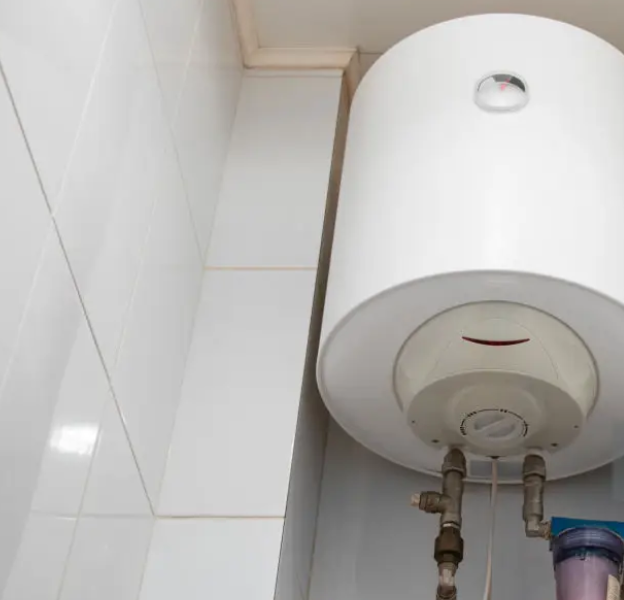
What Changes by Equipment Type
Storage tank installs
The most straightforward job on the list. The tank sits on the floor or a stand, ties into cold and hot lines with flex connectors or rigid pipe, and gas models vent through the existing flue. Adding a piped drain pan is worth the small extra cost anywhere a slow leak could reach flooring or drywall.
Tankless installs
Mounted to a wall, and much less forgiving of shortcuts. Condensing models need stainless or PVC venting, a condensate line run to a neutralizer, isolation valves so the unit can be descaled later, and gas piping sized for the burner's peak draw. In Tempe's hard water, skipping the isolation valves is the single most common install mistake we see corrected later. See tankless water heaters.
Gas installs
Standard atmospheric units draft naturally up an existing chimney or flue; power-vent units push exhaust out sideways through PVC, which is often the only option in garages built without a usable flue. Either way, the install needs a sediment trap, an accessible shutoff, and every joint pressure-tested for leaks before it's signed off. See gas water heaters.
Electric installs
No venting or combustion air needed, but the unit still needs a dedicated circuit sized correctly, and heat-pump models need real air volume around them plus a condensate drain. In the Valley, a garage that bakes to 110°F-plus in summer actually helps a heat-pump unit run efficiently, provided there's enough open space around it. See electric water heaters.
Getting the Size Right Before You Install
More installs disappoint homeowners over sizing than over any mechanical defect. Two nearly identical houses on the same Tempe block can need different-sized equipment depending on who lives there and how they use hot water.
| System | What gets sized | What throws it off |
|---|---|---|
| Storage tank | Gallon capacity and first-hour rating | Simultaneous showers, large soaking tubs, laundry timing |
| Tankless | Gallons per minute at your required temperature rise | Incoming-water temperature and simultaneous fixture demand |
| Heat pump electric | Capacity plus surrounding air volume | Small closets, cold unconditioned spaces |
A capable installer will ask about your morning shower schedule, bathroom count, and whether anyone's ever run the tank dry — those answers matter more for sizing than the square footage of the house.
Safety and Code Details Behind the Wall
Most of what makes an install safe is invisible once the job is finished:
- T&P relief valve piped to a proper discharge point — it should never be capped or run through undersized pipe.
- Expansion tank anywhere a check valve or pressure-reducing valve has turned the plumbing into a closed system.
- Vent sizing and combustion air matched to the burner on any gas-fired unit.
- Dielectric fittings anywhere copper meets steel, to slow galvanic corrosion at the connections.
- Accessible shutoff and drain pan so a future leak or service call isn't a bigger project than it needs to be.
- City permit and inspection, when Tempe or the relevant municipality requires it for the scope of work.
These are also exactly the items a home inspector checks during a resale, so skipping them tends to surface again later at the worst possible time.
Related Water Heater Services
Tankless Water Heaters
Conversion requirements and on-demand sizing.
Gas Water Heaters
Venting and gas supply for combustion units.
Electric Water Heaters
Circuits, elements and heat pump models.
Commercial Water Heater Installation
Capacity, redundancy and utility planning for business properties.
Tempe-Area Communities We Cover
Installation requests are routed to professionals covering Tempe and these nearby communities.
- Mesa, AZ
- Chandler, AZ
- Gilbert, AZ
- Scottsdale, AZ
- Guadalupe, AZ
- Queen Creek, AZ
- San Tan Valley, AZ
- Apache Junction, AZ
- Gold Canyon, AZ
- Fountain Hills, AZ
- Ahwatukee, AZ
Frequently Asked Questions
How long does water heater installation take?
Most tank swaps in an existing closet or garage spot are done in half a day. Tankless conversions and any install moving to a new location run longer, often most of a day, since venting, gas piping or a new circuit has to be built rather than reused.
Is relocating the water heater to a new spot possible during installation?
It can be. Relocating a heater across a garage or into a new closet means extending supply lines, building a proper discharge path for the relief valve, and running new venting or wiring to the new spot — straightforward work, but it adds labor beyond a like-for-like swap.
Do I need an expansion tank?
City of Tempe water service commonly runs through a pressure-reducing valve or backflow device, which turns your plumbing into a closed loop with nowhere for heated water to expand. An expansion tank gives it somewhere to go, and it's standard on most local installs for that reason.
What's the recommended temperature setting for a freshly installed unit?
120°F is a common baseline — enough for showers and dishes while limiting scald risk and standby losses. Some households raise it and add anti-scald mixing valves at the fixtures instead.
Is a permit required for installation?
The City of Tempe and surrounding East Valley municipalities each set their own rules on when a water heater swap needs a permit. Confirm with your installer up front and have them pull any required permit and schedule the inspection.
Can I install a water heater myself?
Gas connections, venting and electrical circuits all carry real consequences if done wrong, and a self-installed unit can void the manufacturer's warranty outright. This is one job worth leaving to a licensed installer.
Request Help With Your Water Heater
Send a few details about your home and your current water heater. We will send you a quote with no obligation.
Unsure which service fits? Select Not Sure on the form and tell us what you're noticing — a lot of Tempe homeowners reach out before they know exactly what's wrong.
Request Your Free Tempe Water Heater Quote
Share a few details about your Tempe water heater and we will send back a quote with no obligation.