
Water Heater Maintenance in Tempe, AZ
Tempe Water Heaters arranges routine water heater maintenance for homeowners and businesses across Tempe, Arizona and the East Valley. It's not exciting work, and it costs little, but it's the clearest factor separating a tank that lasts into its mid-teens from one that fails before year ten — and that gap matters more here, where hard Salt River Project-area water leaves sediment behind with every heating cycle.
Maintenance covers sediment flushing, anode rod measurement, T&P relief valve testing, thermostat calibration near 120°F, expansion-tank pre-charge checks, burner and flame-arrestor cleaning, element resistance testing, and tankless heat-exchanger descaling.
Request Your Free Tempe Water Heater Quote
Share a few details about your Tempe water heater and we will send back a quote with no obligation.
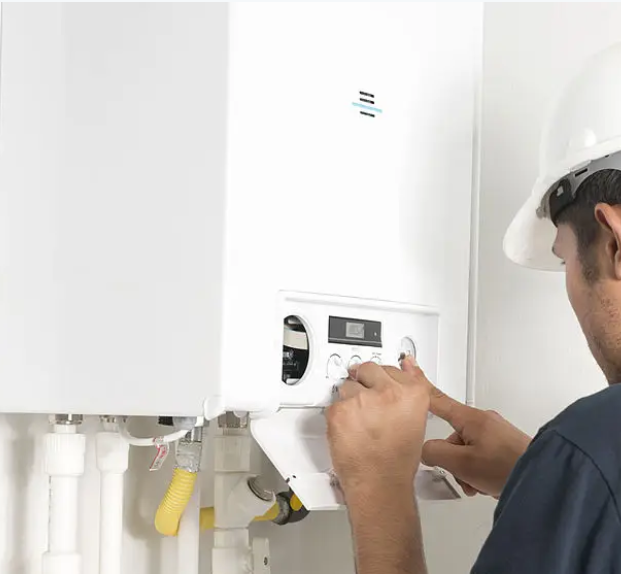
What an Annual Maintenance Visit Covers
- Flush the tank to remove accumulated sediment — see water heater flush.
- Inspect the anode rod and recommend replacement when it's mostly consumed — see anode rod replacement.
- Test the temperature and pressure relief valve and make sure its discharge pipe is routed correctly.
- Confirm the thermostat setting — usually around 120°F.
- Check fittings and the base of the tank for early signs of rust or dampness.
- On gas units, examine the burner and flame pattern, clear the combustion air screen, and confirm the flue is drafting properly.
- On electric units, inspect elements and thermostats for scale buildup and proper function.
- Check the expansion tank on systems that have one.
Why It Matters More With Mineral-Rich Water
Tempe's municipal supply carries enough dissolved calcium and magnesium that every heating cycle leaves a small mineral deposit behind. In a gas tank, that sediment collects on the tank floor right above the burner, acting as insulation that forces the burner to run longer to reach the same temperature. In an electric tank it builds up directly on the elements. In a tankless unit, the same minerals coat the heat exchanger and choke down flow over time.
None of that is dramatic on any single day. Across several summers of heavy demand, the cumulative effect is a higher utility bill, less usable hot water, a rumbling tank, and equipment that fails well before its rated lifespan.
A Simple Homeowner Maintenance Schedule
Monthly (two minutes)
Glance at the tank base and its fittings. Catching moisture, rust streaks or a mineral crust early is far cheaper than dealing with a failure later.
Twice a year
Listen to the unit through a heating cycle. Fresh rumbling or popping sounds point to accumulating sediment.
Annually
Flush the tank, test the relief valve, and have the anode rod checked. On tankless, descale.
Every three to five years
Budget for an anode rod swap, and expect to do it sooner if the home runs a water softener, since softened water eats through the anode faster.
Maintenance and Your Warranty
Most tank warranties are conditional on reasonable upkeep, and tankless manufacturers typically spell out required descaling intervals in writing. A simple log of service dates costs nothing to keep and can matter if you ever need to file a claim. If a unit has already outlived its expected service life, maintenance still pays off — but it's worth reading water heater replacement so you're choosing the timing instead of waiting for a failure to choose it for you.
Related Water Heater Services
Water Heater Flush
The core of an annual service visit.
Anode Rod Replacement
Protecting the tank from corrosion.
Water Heater Repair
When maintenance uncovers a fault.
Tankless Water Heaters
Descaling and annual on-demand service.
Tempe-Area Communities We Cover
Maintenance visits are arranged across Tempe and nearby communities.
- Mesa, AZ
- Chandler, AZ
- Gilbert, AZ
- Scottsdale, AZ
- Guadalupe, AZ
- Queen Creek, AZ
- San Tan Valley, AZ
- Apache Junction, AZ
- Gold Canyon, AZ
- Fountain Hills, AZ
- Ahwatukee, AZ
Frequently Asked Questions
How often should a water heater be serviced?
Once a year is enough for most households. Homes on especially hard water, or running a tankless unit, sometimes do better with more frequent visits.
Can I flush the tank myself?
Plenty of homeowners handle it themselves. The things to watch for are handling hot water safely, an aging drain valve that might not seal back up, and recognizing when sediment buildup has gotten heavy enough to need professional equipment.
Will a water softener change how much maintenance is needed?
It does. A softener cuts down on scale but speeds up anode rod consumption, which makes checking the anode more important, not less.
Can maintenance rescue a water heater that's already on its way out?
Maintenance can bring back lost efficiency and quiet down a noisy tank, but it won't undo corrosion that's already happened or seal a shell that's already leaking.
Does maintenance still pay off on an aging water heater?
For a tank nearing the end of its expected life, maintenance works best alongside a replacement plan rather than as a way to avoid one.
What temperature setting should I use?
120°F works for most households, striking a balance between enough hot water for daily use and lower scald risk and standby heat loss.
Request Help With Your Water Heater
Send a few details about your home and your current water heater. We will send you a quote with no obligation.
Unsure which service fits? Select Not Sure on the form and tell us what you're noticing — a lot of Tempe homeowners reach out before they know exactly what's wrong.
Request Your Free Tempe Water Heater Quote
Share a few details about your Tempe water heater and we will send back a quote with no obligation.