
Water Heater Repair in Tempe, AZ
Tempe Water Heaters connects Tempe-area homeowners and businesses with water heater repair across Tempe, Arizona and the East Valley. Nearly every failure fits into a handful of recognizable patterns, and figuring out which pattern you're dealing with tells you whether the fix is a quick part swap, a maintenance visit, or a replacement conversation.
A service call may involve a gas control valve, thermocouple or thermopile, an igniter, a flame arrestor screen, upper or lower electric elements, a surface-mount thermostat, the high-limit safety switch, a worn dip tube, or a heat exchanger fouled by Tempe's mineral-heavy tap water.
Request Your Free Tempe Water Heater Quote
Share a few details about your Tempe water heater and we will send back a quote with no obligation.
Common Water Heater Problems and What They Mean
No hot water at all
Gas units losing hot water usually point to a dead pilot or igniter, a failed thermocouple, or a bad gas control valve. On electric units the usual culprit is a tripped high-limit reset switch or a failed upper element — but always check the breaker panel before troubleshooting further.
Not enough hot water
Hot water fading sooner than it used to often means sediment has eaten into usable tank volume, a lower element has failed, the dip tube is cracked, or the thermostat is set low. If the shortage has been there since day one, the unit was likely undersized for the household to begin with — common in older Tempe homes that added bedrooms or bathrooms after the original heater went in.
Popping, rumbling or crackling noises
This is trapped water boiling beneath a crust of hardened sediment on the tank floor — a routine complaint given the hard, mineral-heavy water piped throughout the Phoenix metro. A flush is worth trying first; if the noise has been present for years, the tank has likely already taken heat damage.
Leaking
Find the actual source before assuming a replacement is coming. Drips at the drain valve, relief valve, or supply fittings are usually fixable. Moisture coming through the steel tank shell itself is not. See water heater leak repair.
Pilot light won't stay lit
Usually a worn thermocouple or flame sensor, a clogged pilot orifice, or a blocked combustion-air screen. If relighting it once doesn't hold, the fix is a proper diagnosis, not repeated attempts with a lighter.
Heating element failure
Electric tanks run on two elements working in sequence. A dead lower element leaves you with a little hot water; a dead upper element leaves you with almost none. Either way, elements are an inexpensive, routine swap.
Thermostat problems
Scalding water, lukewarm water, or temperature that swings for no reason usually traces back to a thermostat that has drifted out of calibration, failed outright, or lost contact with the tank wall.
Pressure relief valve discharge
A relief valve dripping or dumping water is functioning correctly — the question is what triggered it. High static pressure, thermal expansion in a closed system (common where a PRV or backflow device is installed), or an overheating tank can all set it off. It should never be capped or plugged.
Sediment and corrosion
Sediment cuts into both efficiency and usable capacity. Corroded fittings can usually be repaired, but corrosion through the tank shell itself means the unit is on borrowed time, and replacement is the straightforward answer.
What Happens During a Service Call
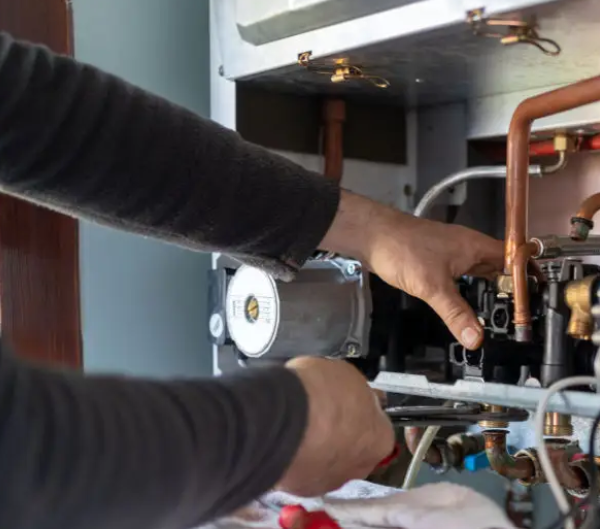
A technician confirms the symptom, verifies fuel or power supply is actually reaching the unit, checks tank temperature, inspects venting and the burner on gas models (or tests elements and thermostats on electric models), and checks all fittings and the relief valve for leaks.
You should walk away knowing what failed, what fixing it involves, and whether the repair is worth doing given the unit's age. Replacing a gas control valve on a 13-year-old tank, for example, often costs more than the tank has left to give.
A Simple Way to Weigh Repair Against Replacement
- Under 8 years, one component down — go ahead and repair it.
- 8 to 12 years, repeat repairs — price out replacement before paying for another fix.
- Leaking from the tank body at any age — replace it; there's no repair for a corroded shell.
- Repair cost near half of a new unit — replacement is almost always the better value.
- Household has outgrown the tank — no repair fixes a heater that was never sized right, including many older units serving expanded households or ASU-area rentals with more residents than the original owner planned for.
On the fence? Maintenance can buy a bit more time, but it won't undo corrosion that's already underway.
Related Water Heater Services
Water Heater Leak Repair
Finding the source and deciding on next steps.
Water Heater Maintenance
Annual service that prevents repeat repairs.
Emergency Service
Active leaks and total hot water loss.
Commercial Water Heater Repair
Diagnostics for business hot-water systems and controls.
Tempe-Area Communities We Cover
Repair requests are matched with professionals covering Tempe and the surrounding area.
- Mesa, AZ
- Chandler, AZ
- Gilbert, AZ
- Scottsdale, AZ
- Guadalupe, AZ
- Queen Creek, AZ
- San Tan Valley, AZ
- Apache Junction, AZ
- Gold Canyon, AZ
- Fountain Hills, AZ
- Ahwatukee, AZ
Frequently Asked Questions
Why does my water heater keep running out of hot water?
Look at sediment buildup eating into tank capacity, a failed lower element on electric models, a cracked dip tube, or a tank that was undersized for the household from the start.
Does a leaking water heater always have to be replaced?
No. Drips from the drain valve, relief valve, or supply fittings can usually be fixed. Water seeping from the tank body itself means the steel has corroded through, and at that point replacement is the only option.
What causes the rumbling sound coming from my water heater?
Hardened mineral sediment on the tank floor is trapping water that then boils underneath it. A flush usually quiets things down and brings back efficiency, though years of buildup can already have shortened the tank's life.
How often do heating elements fail?
Elements are consumables. In the Valley's hard water, elements can scale up and fail within just a few years, though replacing one is among the cheaper repairs on this list.
Is it dangerous if my pilot light keeps going out?
Yes, it's worth a real diagnosis rather than repeated relighting — the cause is usually a failing thermocouple, a dirty pilot assembly, or blocked combustion air. If you ever smell gas, treat it as an emergency and contact Southwest Gas from outside the home immediately.
Can regular maintenance prevent repairs?
It prevents some of them. Yes, to a meaningful degree. A yearly flush, checking the anode rod, and testing the relief valve cover the failure modes behind most of the repair calls we see.
Request Help With Your Water Heater
Send a few details about your home and your current water heater. We will send you a quote with no obligation.
Unsure which service fits? Select Not Sure on the form and tell us what you're noticing — a lot of Tempe homeowners reach out before they know exactly what's wrong.
Request Your Free Tempe Water Heater Quote
Share a few details about your Tempe water heater and we will send back a quote with no obligation.