
Tank Water Heaters in Tempe, AZ
Tempe Water Heaters installs and replaces storage tank water heaters for homeowners and businesses across Tempe, Arizona and the East Valley. Standard storage tanks remain the most common choice in East Valley homes because they are familiar to install, easy to service with parts any local supplier stocks, and cost less upfront than any other whole-home option.
Storage tanks rely on glass-lined steel shells, sacrificial magnesium or aluminum-zinc anode rods, plastic dip tubes, foam insulation and UEF ratings, brass drain valves, T&P relief valves rated at 150 psi and 210°F, and drain pans with piped discharge.
Request Your Free Tempe Water Heater Quote
Share a few details about your Tempe water heater and we will send back a quote with no obligation.
How Storage Water Heaters Work
A storage tank keeps a set volume of water — commonly 40, 50, 65 or 75 gallons — heated and standing by. Incoming cold water travels down a dip tube toward the bottom of the tank, is warmed by a burner underneath or by immersed electric elements, and hot water is pulled off from the top as it's used. A thermostat switches the heat source on and off to hold the target temperature.
Two figures decide whether a tank fits your household: capacity, the total gallons held in reserve, and first-hour rating, the real-world gallons available during a demanding hour once storage and heating speed are combined.
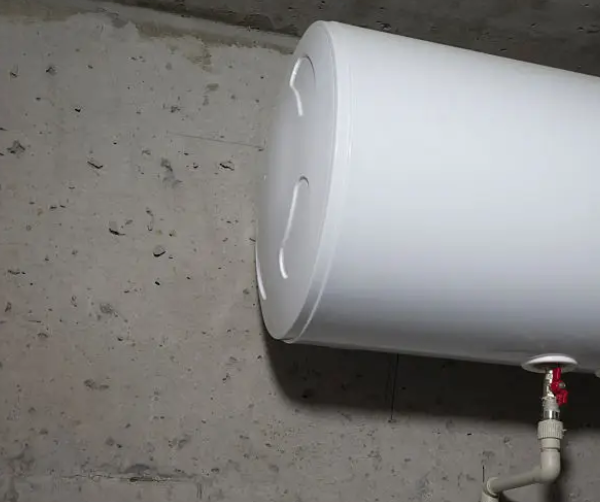
Choosing a Capacity
| Typical household | Common gas capacity | Common electric capacity |
|---|---|---|
| 1–2 people, 1 bath | 30–40 gallons | 40–50 gallons |
| 3–4 people, 2 baths | 40–50 gallons | 50–65 gallons |
| 5+ people, 3+ baths | 50–75 gallons | 66–80 gallons |
Treat the table as a starting point rather than a rule. A deep soaking tub, a rain-style shower head, or two showers running back-to-back on a weekday morning all push actual demand above the table above. Because electric tanks recover more slowly than gas, they're usually specified with extra capacity to compensate. Compare fuel types at gas water heaters and electric water heaters.
Strengths and Limits of a Tank System
Where tanks win
- Lowest upfront cost for whole-home hot water
- Simple like-for-like replacement using existing connections
- Standing-pilot gas models keep working during a power outage
- Straightforward, widely available parts and service
Where tanks fall short
- Finite supply — heavy back-to-back use empties the tank
- Standby heat loss while it holds temperature
- Floor space, plus the risk that a failed tank releases its full volume
- Sediment accumulation in mineral-rich water
If running out of hot water is your main complaint, compare with tankless water heaters.
Getting the Most Life From a Storage Tank
Two maintenance habits matter more than everything else combined: an annual flush to clear sediment, and periodic inspection of the anode rod, which corrodes so the tank doesn't. Pair that with a yearly relief-valve test and a visual check of the fittings for early rust, and you've covered nearly every way a tank typically fails. See water heater maintenance.
Once a tank is genuinely at the end of its service life, water heater replacement walks through the decision, and installation covers what happens on the day of the swap.
Related Water Heater Services
Tankless Water Heaters
The on-demand alternative.
Water Heater Flush
Annual sediment removal.
Anode Rod Replacement
The part that protects the tank.
Tempe-Area Communities We Cover
Tank water heater installation and replacement across the Tempe area.
- Mesa, AZ
- Chandler, AZ
- Gilbert, AZ
- Scottsdale, AZ
- Guadalupe, AZ
- Queen Creek, AZ
- San Tan Valley, AZ
- Apache Junction, AZ
- Gold Canyon, AZ
- Fountain Hills, AZ
- Ahwatukee, AZ
Frequently Asked Questions
How long does a tank water heater last?
Gas tanks typically run 8 to 12 years and electric tanks 10 to 15, with water hardness and how consistently the tank was flushed explaining most of the spread between the short and long ends.
Is a bigger tank always better?
Not necessarily — a tank larger than you need costs more up front and wastes energy holding water hot that you're not using. Match the size to your actual peak-hour usage rather than the biggest unit that will physically fit.
What is a first-hour rating?
It measures how much hot water a fully heated tank can put out over a demanding hour, blending stored volume with how fast the heat source can recover. It's a more useful comparison than raw tank size alone.
Is a drain pan worth having under a tank water heater?
If a leak would run into carpet, drywall or a finished room, yes — a drain pan with a piped discharge turns a tank failure into a minor cleanup instead of a flooring claim.
Can I switch from a 40 to a 50 gallon tank?
In most cases, yes, as long as the closet or alcove has room and the existing connections reach. Ceiling height and vent clearance are usually what determines whether it fits.
Does sediment really shorten tank life?
It does — sediment sits between the burner and the water it's supposed to heat, forcing longer burn cycles and creating hot spots that stress the tank's steel shell and glass lining.
Request Help With Your Water Heater
Send a few details about your home and your current water heater. We will send you a quote with no obligation.
Unsure which service fits? Select Not Sure on the form and tell us what you're noticing — a lot of Tempe homeowners reach out before they know exactly what's wrong.
Request Your Free Tempe Water Heater Quote
Share a few details about your Tempe water heater and we will send back a quote with no obligation.