
Tankless Water Heaters in Tempe, AZ
Tempe Water Heaters connects Tempe-area homeowners and businesses with tankless water heater installation and service across Tempe, Arizona and the East Valley. Rather than storing and reheating a tank of water all day, a tankless unit fires only when a hot tap opens, heating water on the way through. That works well for many Valley households, but the region's hard, calcium-heavy municipal water changes what proper sizing and upkeep look like here.
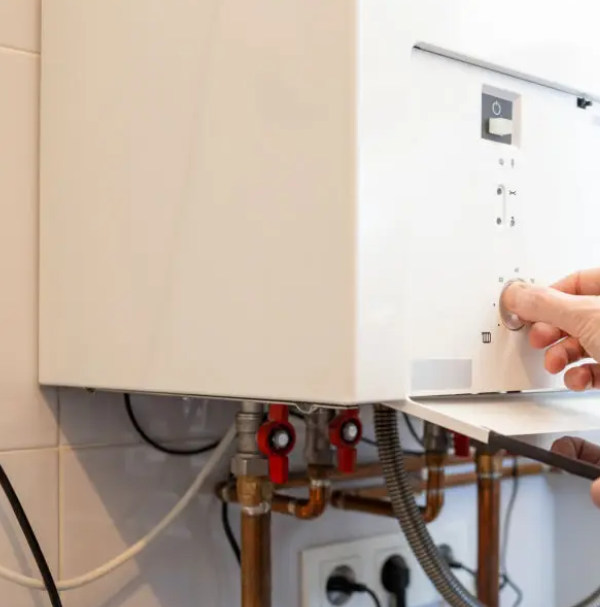
Behind the wall-mounted cabinet: a modulating burner or element bank, a stainless or copper heat exchanger, flow sensors, delta-T-to-GPM performance curves, sealed PVC or polypropylene venting, a condensate neutralizer on condensing models, and isolation valves that let a technician descale the unit with a mild acid flush.
Request Your Free Tempe Water Heater Quote
Share a few details about your Tempe water heater and we will send back a quote with no obligation.
The Mechanics of On-Demand Heating
A flow sensor detects the moment a hot tap opens and triggers a high-output burner or element bank. The incoming water crosses the heat exchanger and comes out at temperature within a couple of seconds; shut the tap and the unit powers back down entirely. Because nothing sits in storage, there's no standby heat loss and no aging 40- or 50-gallon tank sitting there as a future flood risk.
The catch is that capacity is expressed in gallons per minute at a given temperature rise rather than gallons on hand. That flow number, not a tank size, is what decides whether two showers can run at the same time.
Matching a Tankless Unit to Your Household
Everything hinges on temperature rise — the gap between the water coming into the house and the temperature you want at the tap — combined with how many fixtures run together. Tempe's groundwater and CAP-sourced supply run warmer than most of the country, which helps output on paper, but manufacturer flow ratings are still measured under ideal lab conditions and can overstate what you'll actually get on a cooler winter morning.
To size a unit properly, total up the fixtures likely to run at once — roughly 1.5 to 2.5 GPM per shower, under 2 GPM for a kitchen faucet — and check the manufacturer's output at your actual required temperature rise rather than the number on the box. Larger East Valley households or multifamily buildings with simultaneous demand often need a higher-output condensing gas model to keep up.
Undersizing is where most tankless regret comes from, and it's the detail worth nailing down before you sign off on a quote.
Choosing Between Gas and Electric Tankless
Gas tankless
The default pick for covering a whole house. Plan on dedicated venting — stainless or PVC depending on whether the model condenses — a condensate drain on condensing units, and frequently a larger gas line, since these burners pull far more BTUs at peak than a storage tank ever does. Related: gas water heaters.
Electric tankless
No venting to worry about, but a whole-home electric tankless unit pulls enough amperage that a panel upgrade is often part of the job — something worth budgeting for on older Tempe electrical services. They work best as a point-of-use solution for a detached bathroom, garage sink, or small addition. Related: electric water heaters.
What Goes Into Installing and Maintaining One
Install-day requirements
Wall mounting, new vent routing with proper clearance from windows and air intakes, isolation valves for later servicing, condensate handling on condensing models, and confirming the property's gas or electrical capacity can support the unit. Our water heater installation page covers the complete process.
Descaling in hard Valley water
Municipal water throughout the Phoenix metro leaves scale inside heat exchangers faster than in most regions, so manufacturers generally call for descaling on a yearly schedule where the isolation valves make the job routine rather than a teardown. Rinsing the inlet filter screen at the same visit keeps flow and efficiency where they should be; see water heater maintenance.
Deciding If Tankless Fits Your Situation
Tankless earns its keep when hot water regularly runs short, floor or closet space is at a premium, you expect to stay in the home long enough to see the efficiency payback, or venting work is already needed anyway.
A conventional tank often still wins when current demand is being met fine, upfront budget matters most, or the gas and venting upgrade needed for conversion would be costly. Both routes are covered under water heater replacement.
Related Water Heater Services
Water Heater Installation
Venting, gas sizing and mounting requirements.
Water Heater Maintenance
Descaling and annual service.
Tank Water Heaters
The conventional alternative, and when it wins.
Tempe-Area Communities We Cover
Tankless installation and service requests are covered across the greater Tempe area.
- Mesa, AZ
- Chandler, AZ
- Gilbert, AZ
- Scottsdale, AZ
- Guadalupe, AZ
- Queen Creek, AZ
- San Tan Valley, AZ
- Apache Junction, AZ
- Gold Canyon, AZ
- Fountain Hills, AZ
- Ahwatukee, AZ
Frequently Asked Questions
Do tankless water heaters really never run out of hot water?
Output stays continuous as long as demand fits inside the unit's rated flow. Push past it — three showers running with the washer going — and the water temperature starts to drop. Correct sizing is what makes the no-limit promise hold up in practice.
How long do tankless water heaters last?
Manufacturers often quote lifespans well past what a storage tank achieves, but hitting that number depends heavily on regular descaling. Skip it in Tempe's hard water and a unit can fall years short.
Does a tankless unit need a bigger gas line?
Often, yes. A high-output gas tankless unit can draw several times the BTUs of a storage tank at peak, so the existing gas line and meter need to be checked for capacity before the swap goes forward.
Will a tankless water heater work in the Phoenix metro conditions?
It will, provided it's sized against your actual temperature rise and simultaneous flow needs. Tally the fixtures likely to run at once and compare that total against the manufacturer's performance chart before choosing a model.
How frequently does a tankless water heater need descaling?
Once a year is the typical guidance given how mineral-heavy Valley water is, and some manufacturers require documented descaling to keep the warranty valid. With isolation valves already installed, it's a quick service call rather than a major job.
Will a tankless unit fit in the same spot as my old tank?
In most cases, and doing so frees up floor space — though the available vent route, gas line capacity, and condensate drain location tend to matter more than where the old tank happened to sit.
Request Help With Your Water Heater
Send a few details about your home and your current water heater. We will send you a quote with no obligation.
Unsure which service fits? Select Not Sure on the form and tell us what you're noticing — a lot of Tempe homeowners reach out before they know exactly what's wrong.
Request Your Free Tempe Water Heater Quote
Share a few details about your Tempe water heater and we will send back a quote with no obligation.