
Water Heater Anode Rod Replacement in Tempe, AZ
Tempe Water Heaters provides water heater anode rod replacement in Tempe, AZ for homeowners and businesses across Tempe, Arizona and the East Valley. Hanging inside every storage tank is a rod of magnesium or aluminum with one purpose: corrode first so the steel tank doesn't have to. Swap it out on a regular schedule and the tank's life stretches by years; skip it and the rust eventually finds the steel.
Anode service involves galvanic protection chemistry, magnesium versus aluminum-zinc alloy rods, combination anode-outlet nipples, segmented flexible rods for low-clearance closets, hex-head torque, and powered titanium impressed-current anodes for aggressive water.
Request Your Free Tempe Water Heater Quote
Share a few details about your Tempe water heater and we will send back a quote with no obligation.
How the Sacrificial Anode Protects Your Tank
A storage tank is steel with a glass lining. Any tiny gap or chip in that lining leaves bare metal exposed to hot water, and hot water is exactly the environment corrosion thrives in. Because the rod metal is more chemically reactive than steel, it's the one that gets attacked electrochemically first. While usable metal remains on the rod, corrosion attacks it instead of your tank.
Once the rod wears down to its bare core wire, the protection stops and the tank itself starts to rust. From that point, the clock toward an eventual tank leak starts running, silently, often for years before there's anything visible to notice.
When to Inspect and Replace
- Check it the first time around the three-year mark, then every couple of years afterward.
- Move up the schedule with a water softener — treated water eats through anode material much faster.
- Swap it out once the rod is badly pitted or the core wire shows along most of its length.
- Worth doing if the hot water has a sulfur smell — changing the rod material frequently clears it up.
Inspection is easiest to fold into an annual maintenance visit or a flush, since the technician is already at the tank.
Rod Types and Choosing the Right One
| Type | Best suited to | Notes |
|---|---|---|
| Magnesium | Most municipal water | Strong protection; consumed faster in softened water |
| Aluminum / zinc alloy | Homes with sulfur odor | The zinc content commonly reduces the rotten-egg smell |
| Powered (impressed current) | Difficult water chemistry | Doesn't deplete; needs an electrical outlet |
| Flexible / segmented | Low overhead clearance | Installs where a rigid rod won't fit above the tank |
What the Job Involves
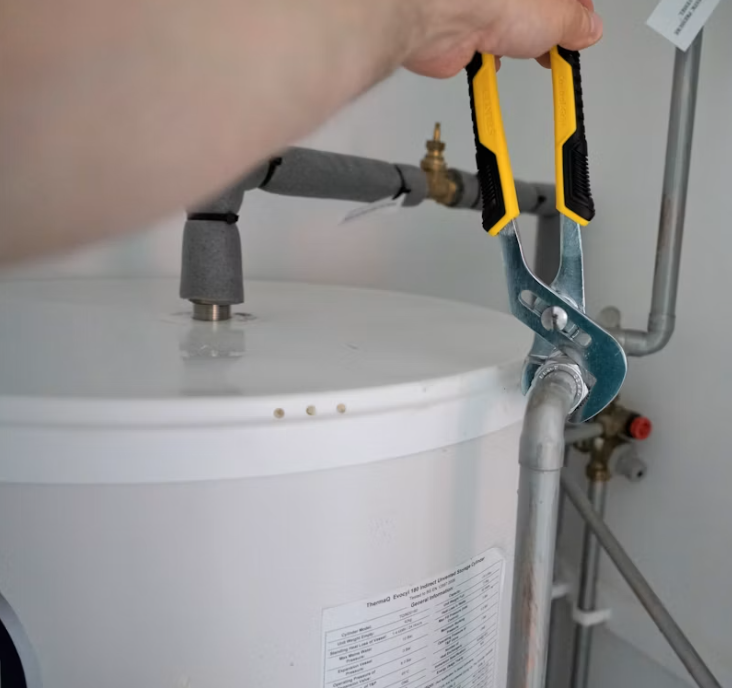
First the power or gas and the water supply get shut off and pressure is released. Breaking the hex bolt loose at the top of the tank is often the toughest part of the job, since a rod that's sat for ten summers can seize solid. A few tanks build the anode into the hot-water outlet fitting instead, which calls for a different removal approach. Once the old rod is out, the new one goes in with fresh thread sealant before the tank is refilled and checked for drips.
Low ceiling above the tank? A flexible segmented rod gets around that without relocating the unit.
Is It Worth Doing on an Older Water Heater?
If the tank is under roughly eight years old and shows no rust, absolutely — the cost is small compared to the protection it buys. On a unit past its first decade with visible rust at the fittings or base, a new rod won't undo the damage already underway, and that money is usually better spent toward replacement. A technician can tell you which camp your water heater falls into after a quick look.
Related Water Heater Services
Water Heater Maintenance
Bundle anode checks with annual service.
Water Heater Flush
Sediment removal at the same visit.
Tank Water Heaters
How storage tanks are built.
Tempe-Area Communities We Cover
Anode rod service is available across Tempe and nearby communities.
- Mesa, AZ
- Chandler, AZ
- Gilbert, AZ
- Scottsdale, AZ
- Guadalupe, AZ
- Queen Creek, AZ
- San Tan Valley, AZ
- Apache Junction, AZ
- Gold Canyon, AZ
- Fountain Hills, AZ
- Ahwatukee, AZ
Frequently Asked Questions
What does an anode rod do?
It sacrifices itself so the tank doesn't have to. As the more reactive metal, it draws the corrosion that would otherwise eat into the exposed steel inside the heater.
How often should the anode rod be replaced?
Take a look around the three-year mark, then every two to three years going forward. In practice, most rods get swapped somewhere between years three and five, faster if the home has softened water.
Can I check the anode rod myself?
You can try, but the fitting is often seized tight and needs real torque along with draining the tank properly first. Most homeowners just have it checked during a regular maintenance visit.
Why does my hot water smell like rotten eggs?
That smell typically comes from a magnesium anode reacting with certain bacteria present in the water supply. Switching to an aluminum/zinc rod usually solves it.
Can a new anode rod genuinely make a tank last longer?
This is one of the rare maintenance tasks with a direct, provable effect on how long a tank lasts, since once the rod is spent, the corrosion moves straight to the steel.
Do tankless water heaters have anode rods?
Most tankless models skip it entirely since there's no tank to defend. A handful of hybrid units still use one; for straight tankless systems, periodic descaling fills the same maintenance role.
Request Help With Your Water Heater
Send a few details about your home and your current water heater. We will send you a quote with no obligation.
Unsure which service fits? Select Not Sure on the form and tell us what you're noticing — a lot of Tempe homeowners reach out before they know exactly what's wrong.
Request Your Free Tempe Water Heater Quote
Share a few details about your Tempe water heater and we will send back a quote with no obligation.